January 14, 2026

AnUnnamed Path: The Contemporary Re-activation of History
By Darian Duan
Artistic conceptsoften arise from an artist’s response to the issues they care about. Porcelainart today faces a pressing challenge: in the contemporary context, must itstill be understood solely in terms of “type” and “technique”? This phenomenonsignificantly hinders its development. Or, like painting, could porcelainbecome a continually evolving system of ideas and methods, thereby breaking thestalemate and gaining the freedom to begin anew?
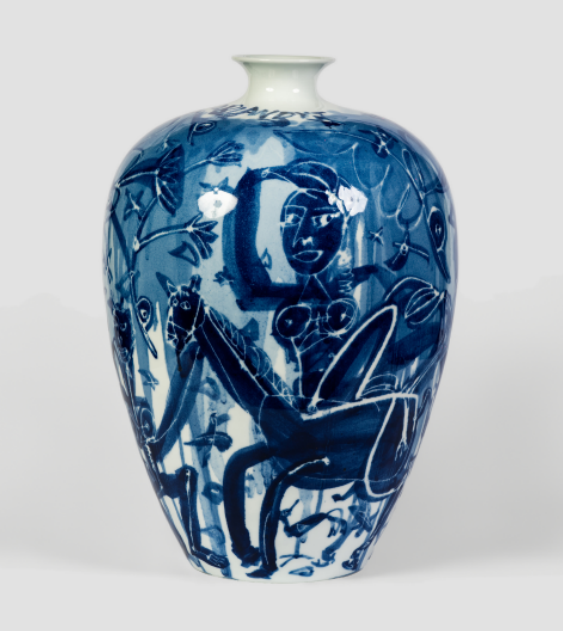
It is preciselyfrom this awareness of the issue that I introduced the concepts and methods ofpainting into porcelain practice. Consequently, my work with porcelain is notbased on the continuation of existing styles or decorative types but seeks toreposition the possibilities of porcelain within a global context.
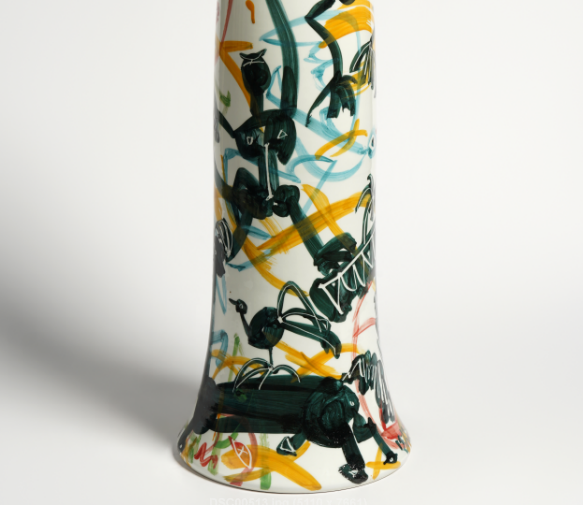
IV. An Unnamed Path: The Contemporary Re-activation ofHistory
When discussing originality, this does not imply a severingof connections with history, nor an oppositional stance toward it. On thecontrary, my practice is grounded in a deep understanding of the histories ofporcelain and painting. The difference lies in the fact that I do not attemptto return to any single tradition; rather, I treat splashed and pouredcolour, painting, carving, and other historical achievements asreactivatable, revelatory resources—tools through which contemporary creativitycan be generated.
Within the global context of porcelain, my work does notbelong to blue-and-white, Famille Rose, or any established category, nor doesit fully correspond to any formal language of contemporary ceramics. Rather, itapproaches a path yet to be named—a practice centred on my own painterly ideasand creative process, one that reevaluates the historical “authority ofcompletion,” generates new value through acts of destruction, and relies on thekiln as the ultimate arbiter in a collaborative material process. It is acontemporary porcelain practice in which artist, material, and fire conspire toproduce form.
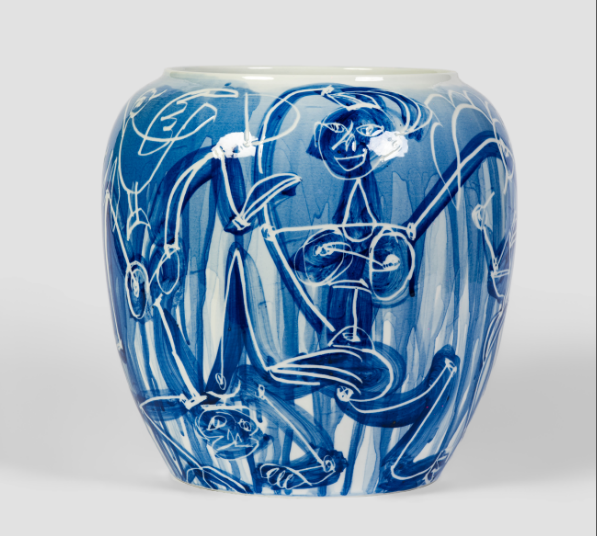
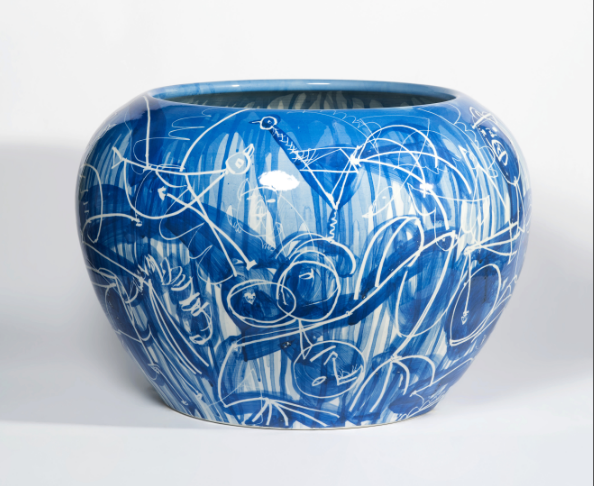
This practice does not seek to offer any definitiveconclusion; rather, it continuously poses questions to society regarding thereality of life’s expression. When painting leaves the canvas and intervenes inporcelain as an expressive agent rather than mere decoration, and whenporcelain refuses to be monopolized or constrained by the historical authorityof “looking like porcelain” or by categorization, new possibilitiesemerge—raising questions about the direction of visual experience, performativeengagement, and material relationships.
Conclusion
In my practice, porcelain is no longer constrained byhistorical authority, nor does it serve as a mere testament to technicalcompletion; it becomes an artistic form that unfolds in sync with contemporarylife experience. By introducing painterly methods into porcelain and infusingit with uncertainty, emotion, and spiritual energy, and by subjecting the workto trials of disruption, failure, and reconstruction—where destruction marksboth the starting and ending points of value generation—my creative objectiveis focused on exploring a new mode of existence for porcelain within thecontext of contemporary art.




%20-%20Copy.jpg)