January 14, 2026
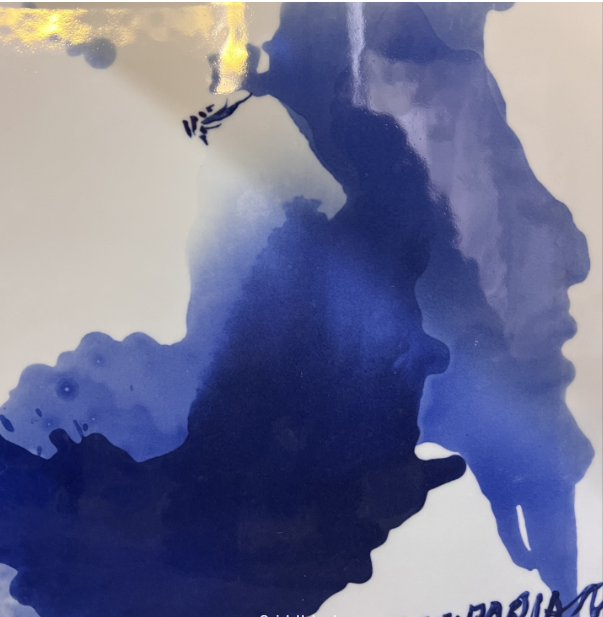
Lin-Cai (Pouring colour) and the ExpressiveBlade: A Methodology of Rupture
by Darian Duan
Artistic concepts often arise from an artist’s response tothe issues they care about. Porcelain art today faces a pressing challenge: inthe contemporary context, must it still be understood solely in terms of “type”and “technique”? This phenomenon significantly hinders its development. Or,like painting, could porcelain become a continually evolving system of ideasand methods, thereby breaking the stalemate and gaining the freedom to beginanew?
It is precisely from this awareness of the issue that Iintroduced the concepts and methods of painting into porcelain practice.Consequently, my work with porcelain is not based on the continuation ofexisting styles or decorative types but seeks to reposition the possibilitiesof porcelain within a global context.
II. Lin-Cai (Drip-Glazing) and the ExpressiveBlade: A Methodology of Rupture
My methodology is not a continuation of a single traditionbut a creative synthesis and revaluation of multiple systems. This isexemplified in my evolution of Po-Cai (splashed colour). Traditionally a technique rooted in Chinese painting on two-dimensional planes, "Po-Cai" often serves to evoke a generic "Eastern aesthetic." I have movedbeyond the pursuit of such stylistic tropes.
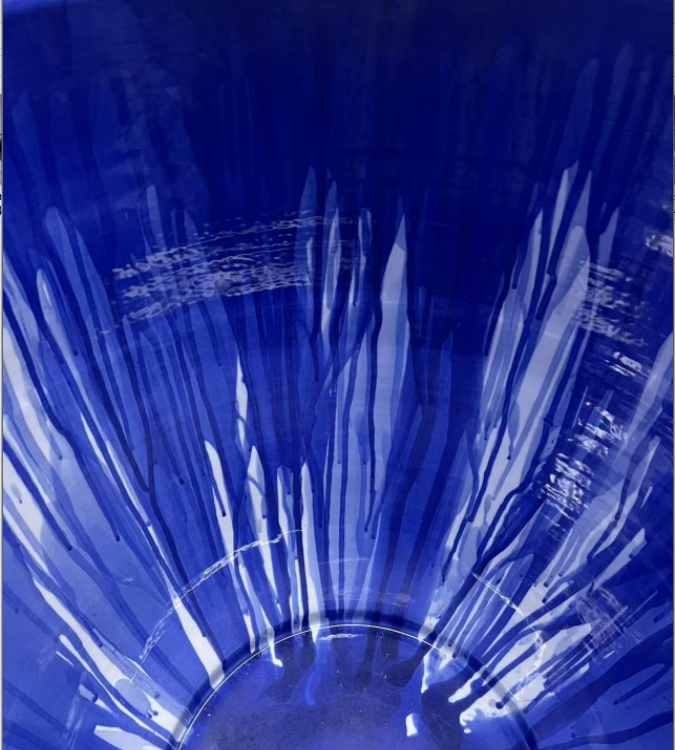
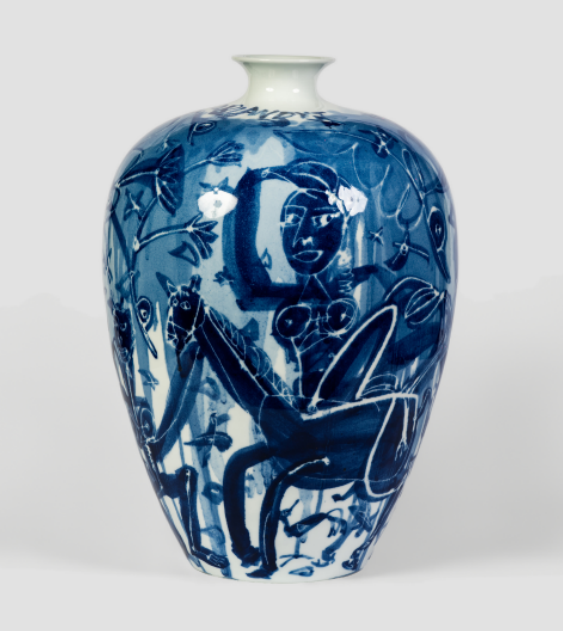
By shifting the creative field from the flat desk to the three-dimensional ceramic volume, I have transformed the act of "splashing" into a controlled, rhythmic, and gravity-driven pouring—a slow, rotational descent. Consequently, the term Po (splat/splash) nolonger suffices. I have redefined this as Lin-Cai (Drip-Glazing),a term that encapsulates the integration of temporality, physical gravity, and rhythmic cadence. Thus, “splashed colour” is reconstituted as “poured colour,”a mode of practice that introduces a novel generative mechanism for the formation of pictorial structure.
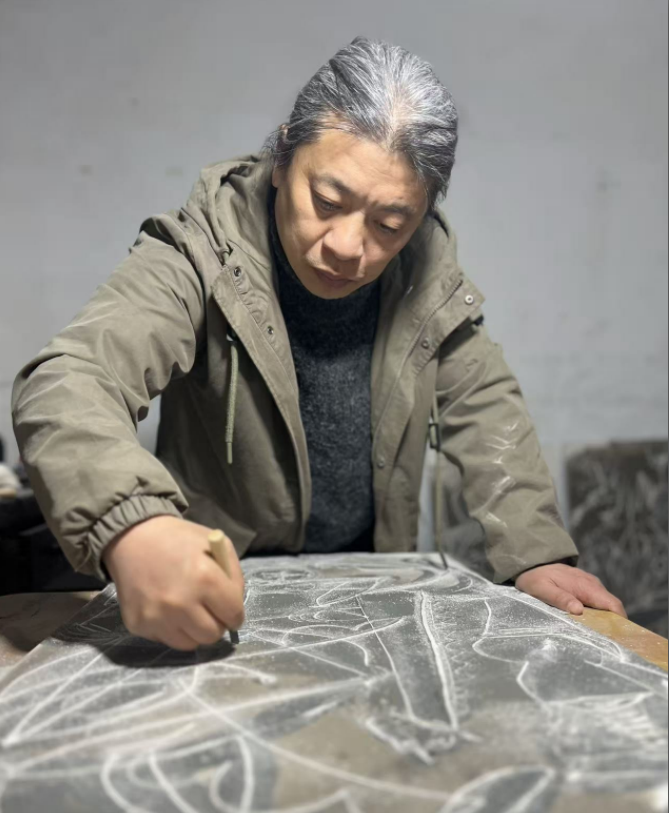
What truly liberates this method from the tradition of decoration is the subsequent intervention of carved painting. By inscribing the already completed surface, the composition is reconstructed, and the lines left by the carving transform the image from a visual language into a tangiblephysical structure. For the first time, painting asserts an independent identity and acquires spatial dimension within porcelain. Here, there is an essential distinction between the two, which I must repeatedly emphasize: my carved painting no longer possesses functional value in the traditional sense. It does not depict any material form in the physical world, but answers solely to the artist’s emotions, thoughts, and spirit. It is a knife of metaphysical emotion, of philosophical thought, of spiritual intent—rather than a knife of physical function or technical execution.
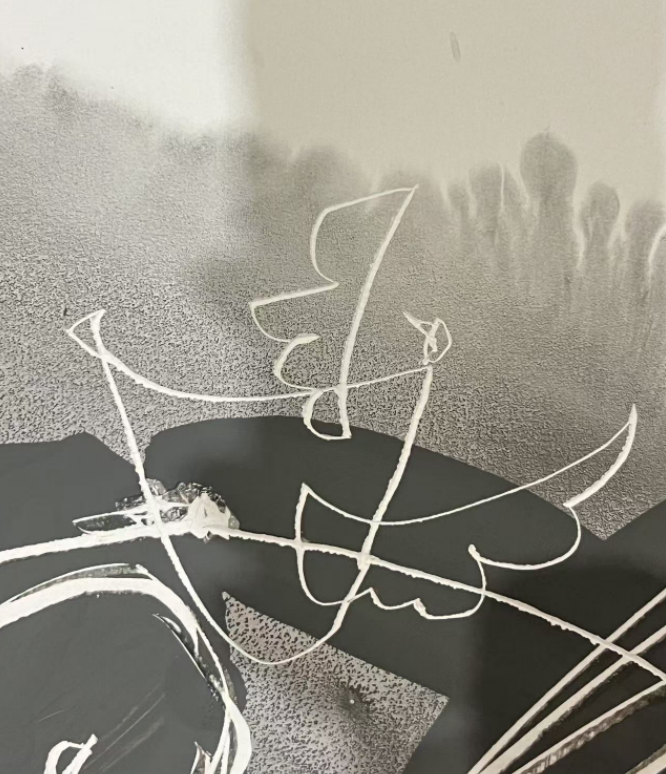
Throughout the history of porcelain, the use of carvingtools has been thoroughly documented in China, Italy, and elsewhere, withestablished technical systems. Traditionally, carving has been regarded as afunctional means for depicting form, ornament, or pattern. In my practice,however, it has undergone a radical transformation, evolving into a mechanismthat actively negates the historical authority of “completed” craft. It assumesthe role of reconstructing temporal and spatial structures for the expressionof a free spirit. By making destruction a generative condition, this approachestablishes a symbiotic relationship between painting, porcelain, andmaterial—a relationship of mutual imbrication and intimate fusion, wheresubjectivity flows seamlessly between artist and medium.
To be continue



%20-%20Copy.jpg)