Abstract: This essay outlines the conceptual and methodological framework of Darian Duan’s contemporary porcelain practice.
Artistic concepts often emerge as an artist’s response to the questionsthey confront. Porcelain, as an artistic medium, is currently faced with acritical dilemma: within contemporary discourse, is it still confined to beingunderstood primarily through typology and technique? Such a mode ofinterpretation has severely constrained the development of porcelain, limitingit to a closed system of craft classifications.Alternatively, couldporcelain—like painting—be approached as an open, continuously evolving systemof concepts and methods, thereby breaking this impasse and reclaiming the freedom to begin anew?
It is from this critical awareness that I introduce the conceptual framework and methodological strategies of painting into my porcelain practice.My work does not seek to extend existing stylistic lineages or decorative traditions. Rather, it aims to reposition porcelain as a contemporary artisticlanguage within a global context, one capable of generating new meanings through conceptual intervention and material reconfiguration.

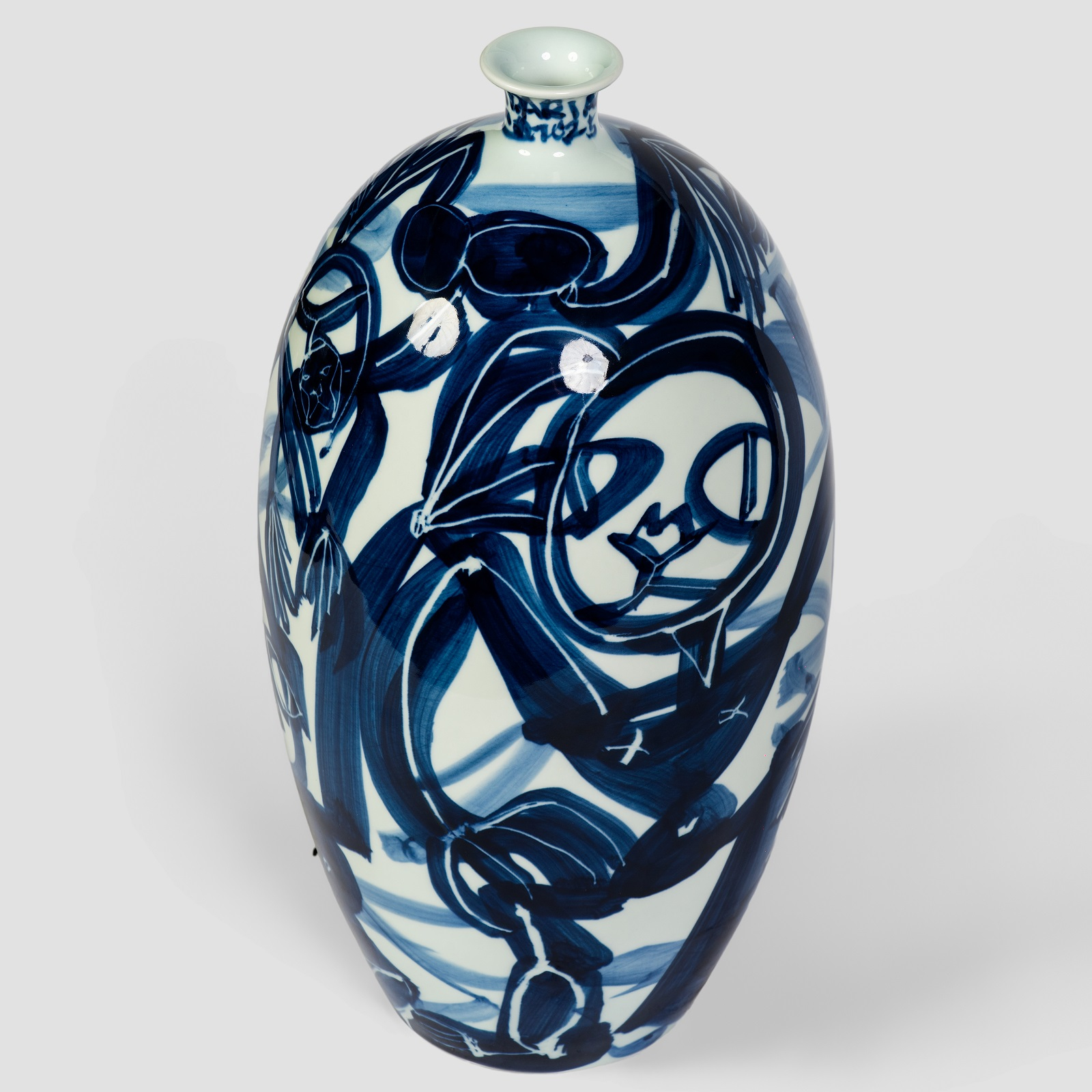

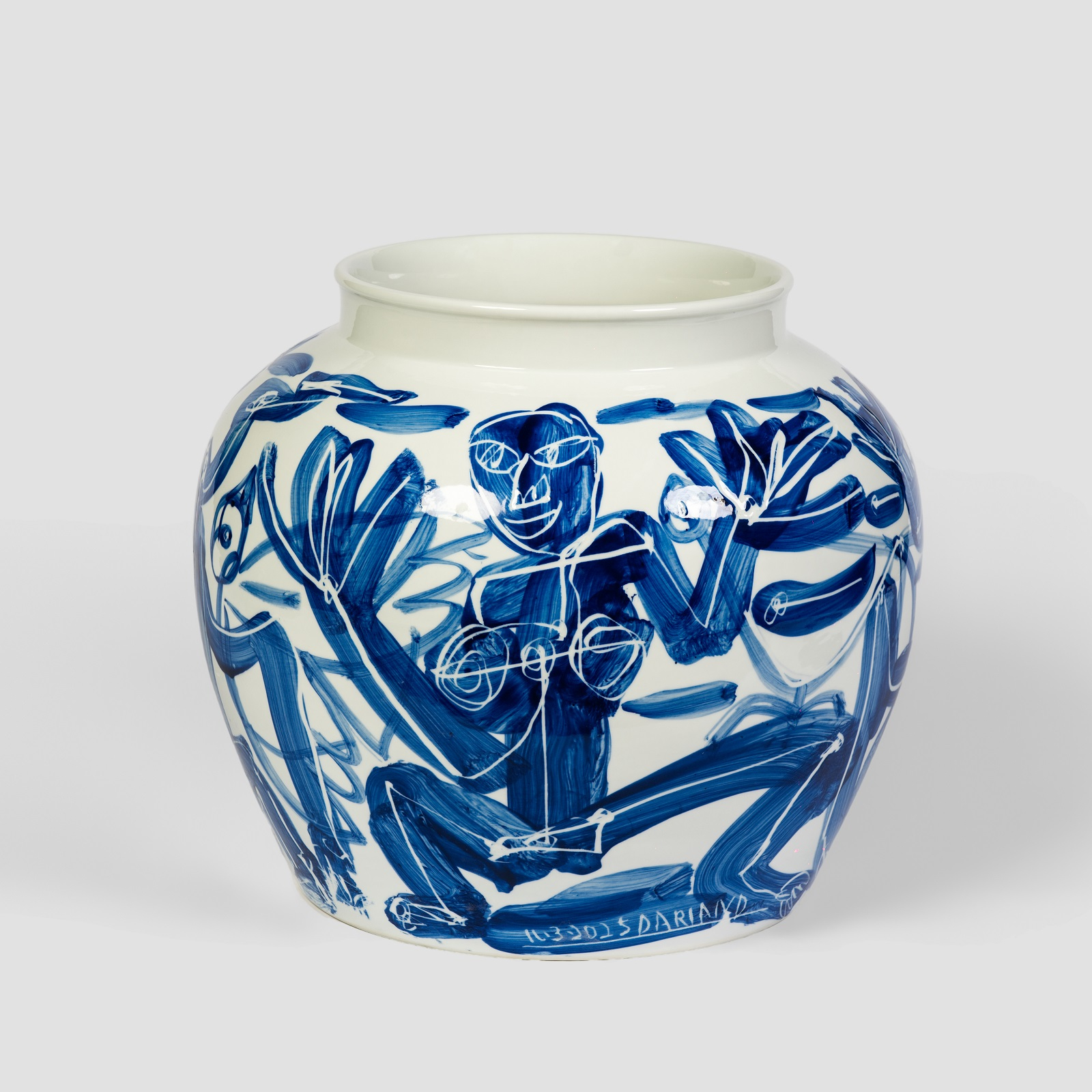
To begin, it is necessary to reconsider the historical relationship between painting and porcelain. Throughout the long history of global ceramic production, this relationship has been largely confined to the realm of decoration. Whether through artists’ involvement in the design and execution of ornamental motifs, or through painting itself—be it overglaze enamels,underglaze blue-and-white, or coloured glazes—painting has remained restricted to the surface of the object, functioning primarily as visual embellishment or surface filling.
My practice does not seek to deny or negate this historical condition.Rather, it aims to liberate painting from its decorative function and to reposition it as a structural and open-ended mode of expression—one capable of penetrating the ceramic body itself. Here, painting no longer resides solely onthe surface of porcelain; instead, it participates in the logic of the object’s formation. It intervenes into the glaze and extends toward the clay body,disrupting and dismantling the established authority of decorative“completion,” and in doing so, opens the practice toward a contemporary reconfiguration.
Through this process, porcelain ceases to function merely as a supportfor painting, just as painting is no longer reduced to ornamentation orembellishment. The two converge and become inseparable, jointly constituting amaterial and spatial field through which contemporary art can be expanded,translated, and critically rearticulated.
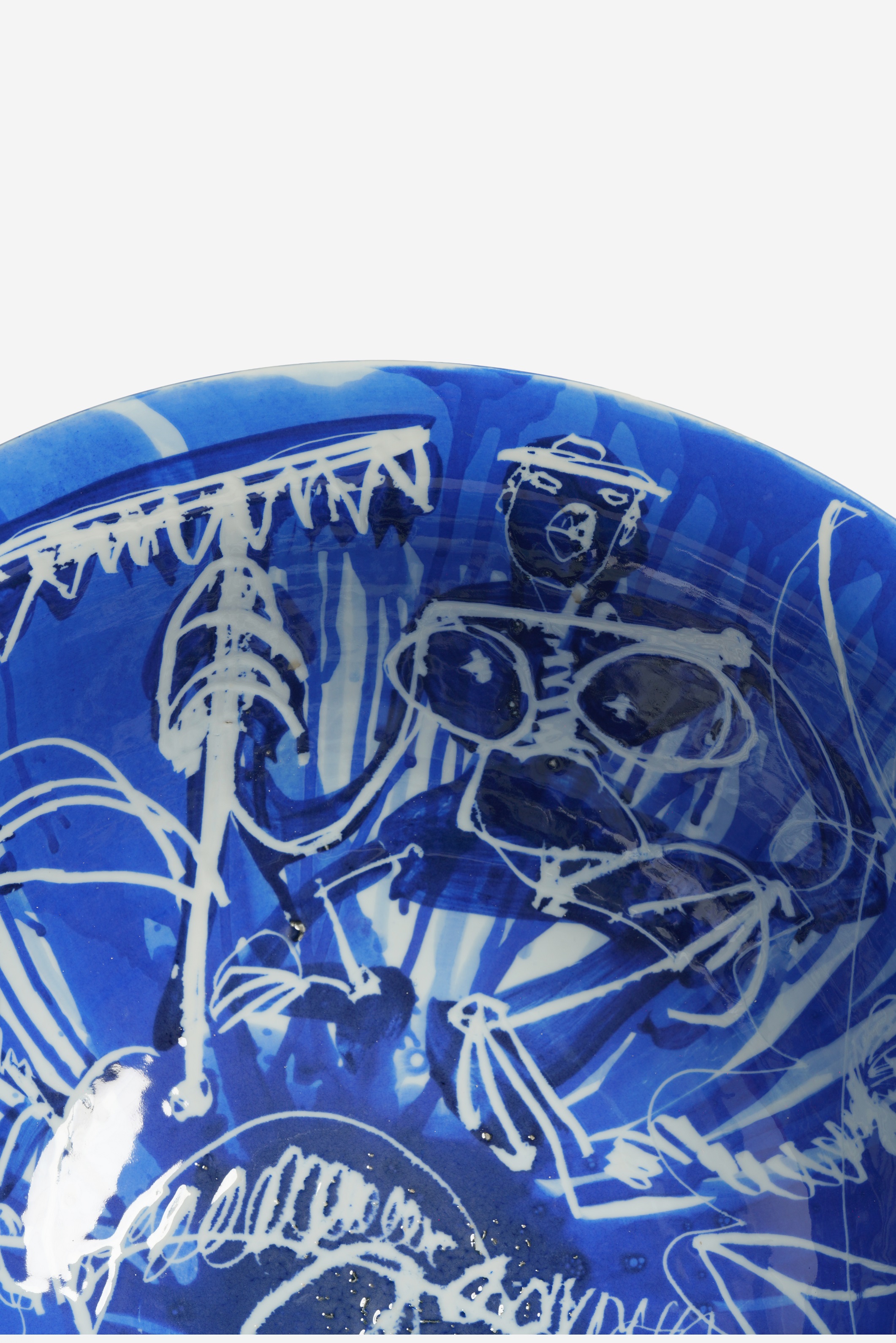
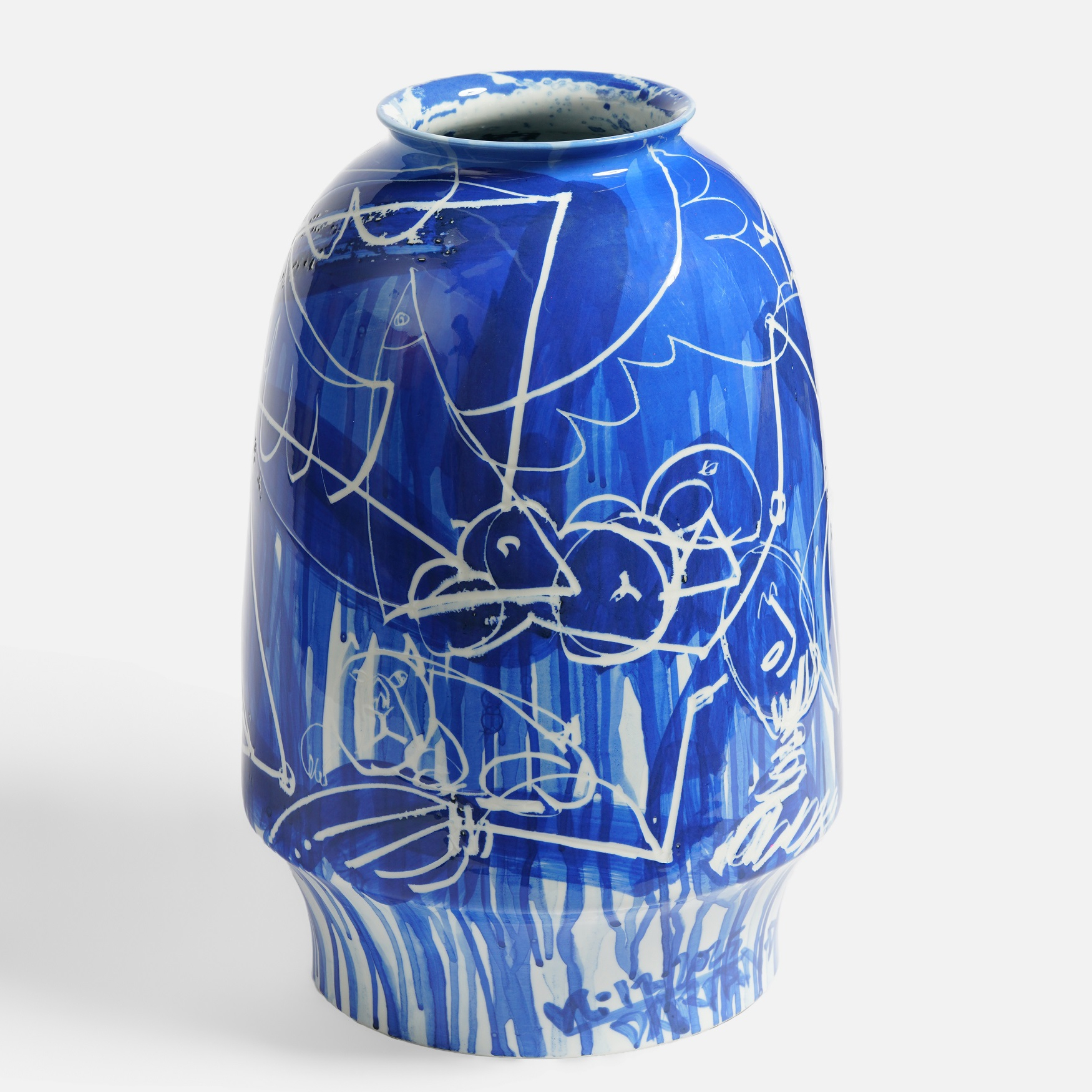
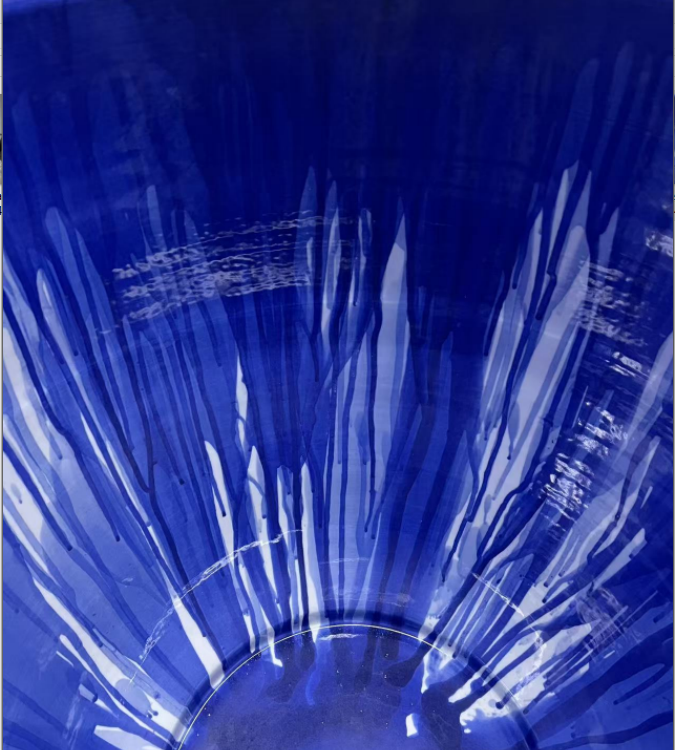
From a methodological perspective, my practice does not constitute the continuation of a single tradition; rather, it is a re-evaluation and creativeintegration of multiple systems of value. A key example is the reconsideration and inventive development of “splash painting.” Originating in Chinese painting, splash techniques were traditionally applied to flat surfaces—on paper or ceramic panels—as spontaneous gestures. In my work, the pursuit of producing a specifically “Eastern aesthetic” is no longer a concern. Instead, I have redefined both the meaning and scope of splash painting according to myown internal imperatives.
The object of creation shifts from planar surfaces to the three-dimensional structure of porcelain. The gesture of “splashing” is transformed into a controlled, gravity-driven pour: the pigment cascades fromheight in rotational, flowing motions. In this context, the traditional term pō(“splash”) no longer adequately expresses the conceptual and technicalinnovations of this method. I therefore adopt the term lín (“pour”),reflecting an approach that integrates temporality, gravitational physics, and rhythmic movement. Through this transformation, the traditional splashtechnique is elevated into “drip-glaze”, a mechanism capable ofgenerating new structural logics within the pictorial field. While reminiscentin gesture to the dripping of oil paint by Abstract Expressionist masters suchas Jackson Pollock, this method diverges fundamentally in terms of material,layering, sensation, and conceptual intention. The drip-glaze thus establishesthe free operational field for subsequent interventions.
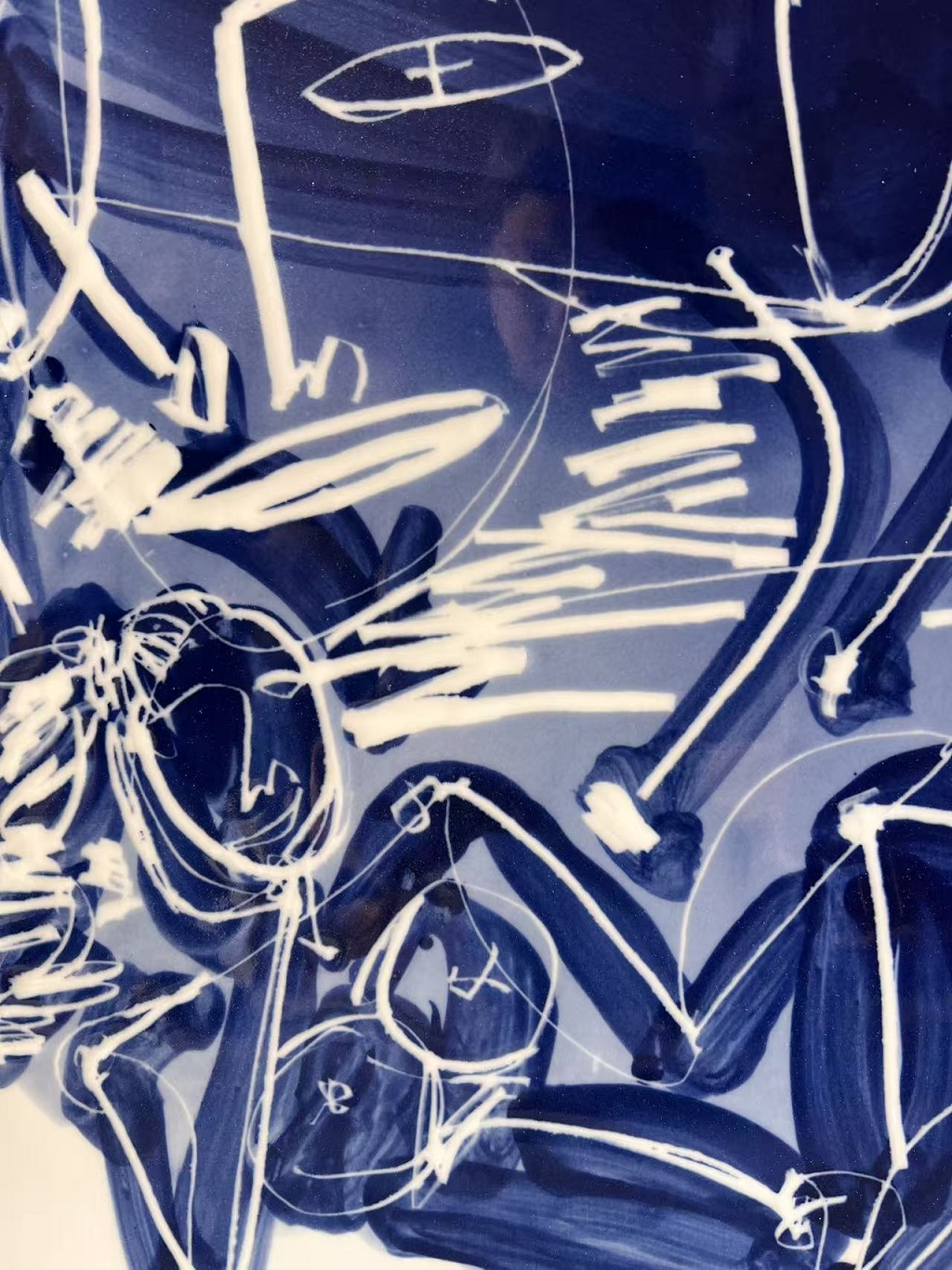
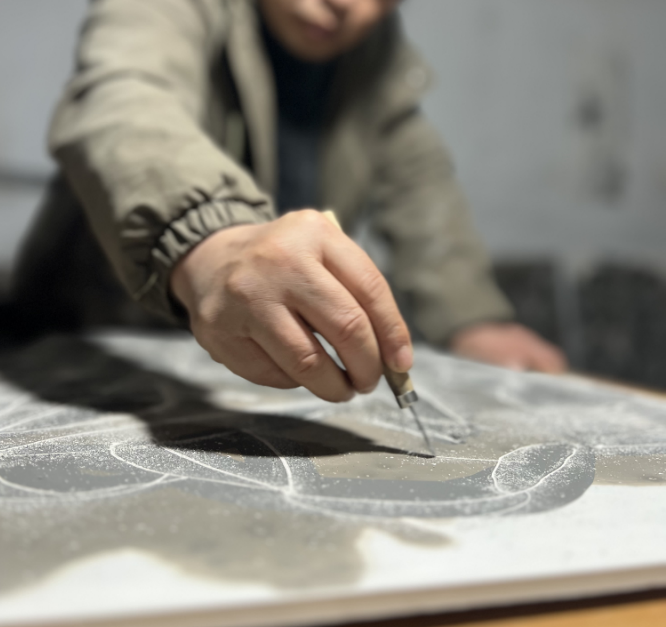
What truly liberates this method from decorative tradition is the intervention of the knife, applied after the completion of the painted surface. Through incisive carving, a process of destructive reconstruction unfolds. The resulting cuts convert the visual language of the surface into atactile, performative, and structural entity. The notion of decorative“perfection” is utterly dismantled, the myth of refinement shattered, and the expression of spiritual freedom is foregrounded. Purely artistic expression,for the first time, attains spatial presence within porcelain.
It is crucial to emphasize a fundamental distinction: my knife work nolonger serves any traditional functional purpose. It does not render materialforms in the conventional sense; it responds solely to the artist’s emotions,thoughts, and spiritual intentions. This is a metaphysical knife—of sentimentand intellect—rather than a tool for functional or technical ends. While theuse of carving implements is common in the global history of porcelain—from China to Italy, often systematically documented for ornamentation, relief, orstructural expression—traditional carving remains instrumental, serving functional or decorative objectives. In contrast, within my practice, the knife has undergone a radical transformation: it becomes a mechanism that negates the historical authority of “completion” in craft, actively assuming the role of reorganizing temporal and spatial structures for free-spirited expression.
By adopting destruction as a generative condition, painting, porcelain,and materiality enter into an intimate, interdependent relationship—a pure,subjective symbiosis in which each permeates the other, forming a dynamic fieldof mutual creation.
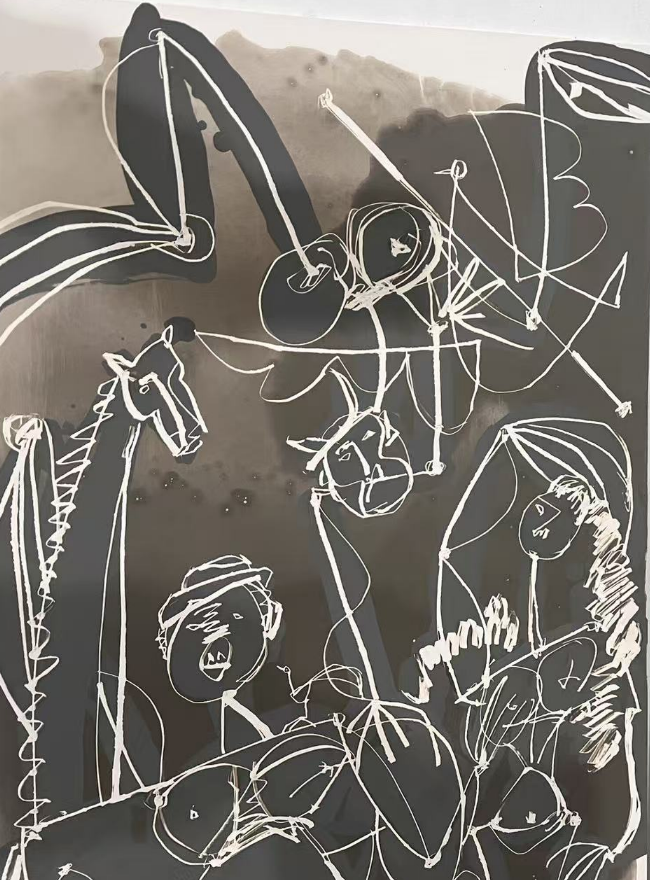
Colour has always occupied a central position in the history ofporcelain. Within ceramic discourse, painted decoration has traditionally been regarded as paramount—often described by the adage “three parts vessel, sevenparts painting,” while painting itself is said to consist of “three parts drawing, seven parts colour.” In this framework, colour appears on porcelainprimarily as a pictorial layer on the surface. However, the use of colour has long been constrained by typological classification systems—such asblue-and-white, famille rose, copper red underglaze, monochrome glazes, and “doucai”.While historically significant, these categories have gradually solidified intostylistic labels within contemporary practice.
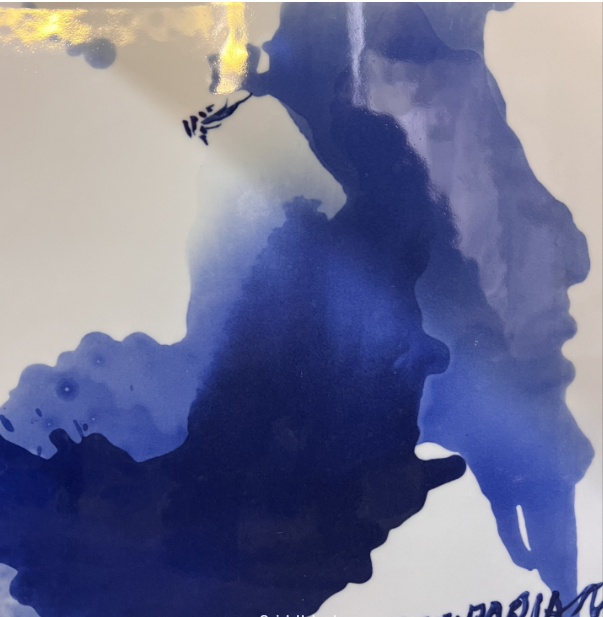
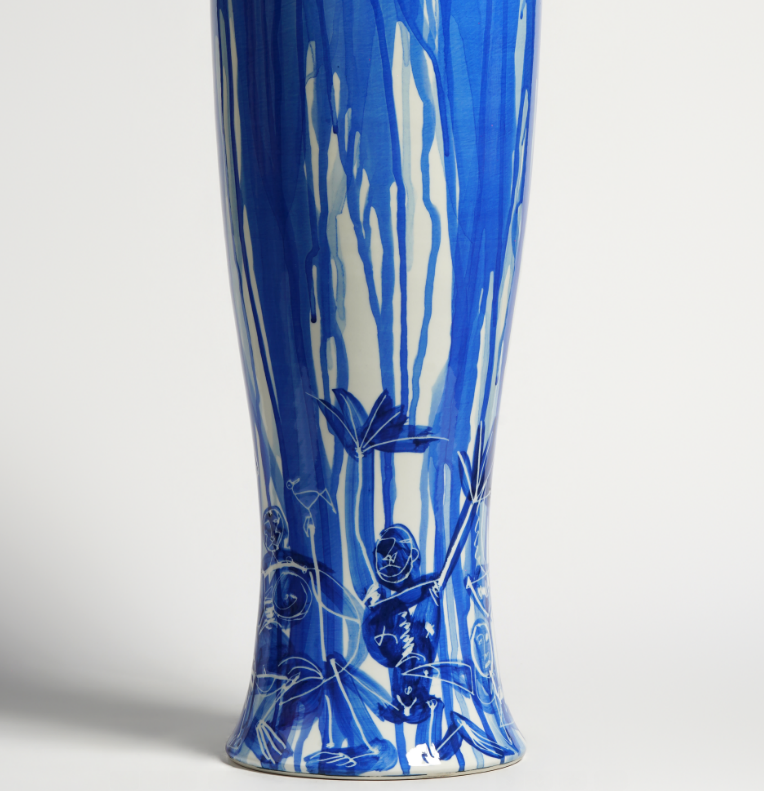
My work does not aim to return to or replicate these established classifications. Instead, it translates my understanding and sensory experienceof colour developed through planar painting into the three-dimensional mediumof porcelain. Colour is no longer treated as a superficial layer; through the successive flowing and accumulation of drip-glaze, it introduces a temporaldimension into the work. The expressive capacity of colour is activated through painting, while the combined forces of glaze thickness, incision depth, and the firing process operate as an integrated system. Together, these elements generate a visual and tactile experience characterized by spatial depth andcontinuous movement.
Taking blue-and-white as an example: in my use of cobalt-based materialsthat produce blue during firing, I do not consider my practice a simple extension of the historical lineage of blue-and-white porcelain. Rather, bluefunctions as a pictorial language endowed with emotional density, temporal transformation, and structural weight. Through layered drip-glaze, painting,and the superimposition and reconstruction enacted by the metaphysical knife,blue on the porcelain surface acquires spatial dimensionality, temporal flow,and an unpredictable trajectory. In doing so, the work decisively exceeds the historical authority of planar decorative “completion,” formally breaking freefrom its long-standing constraints.
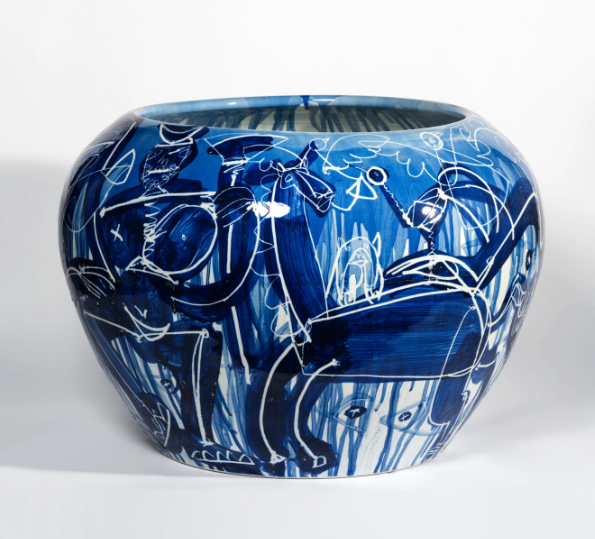
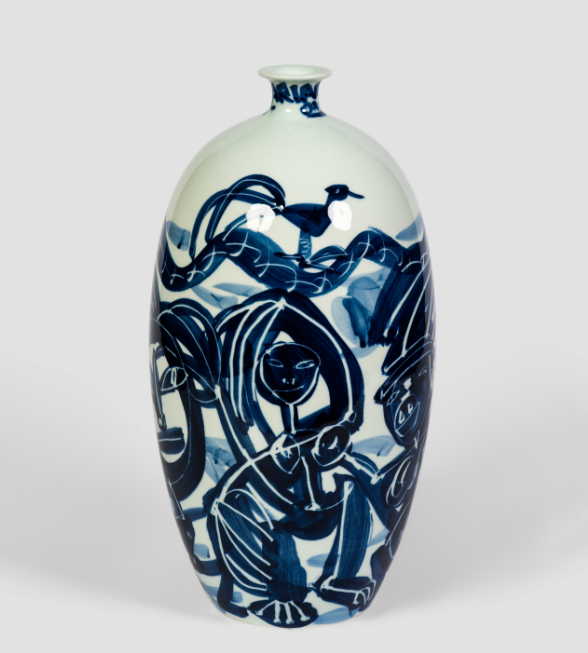
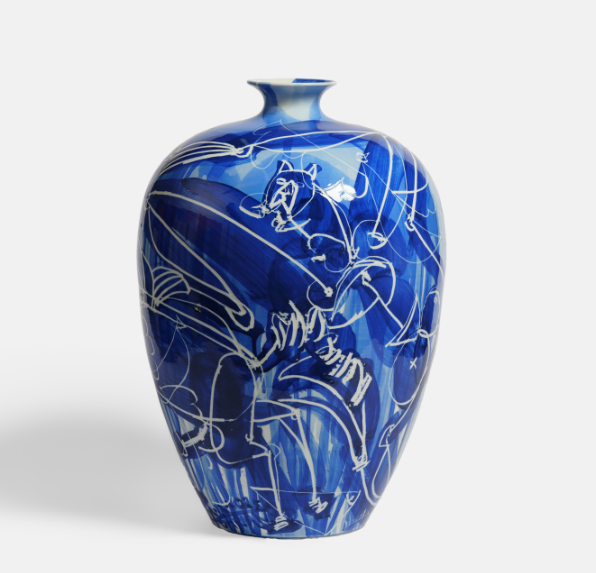
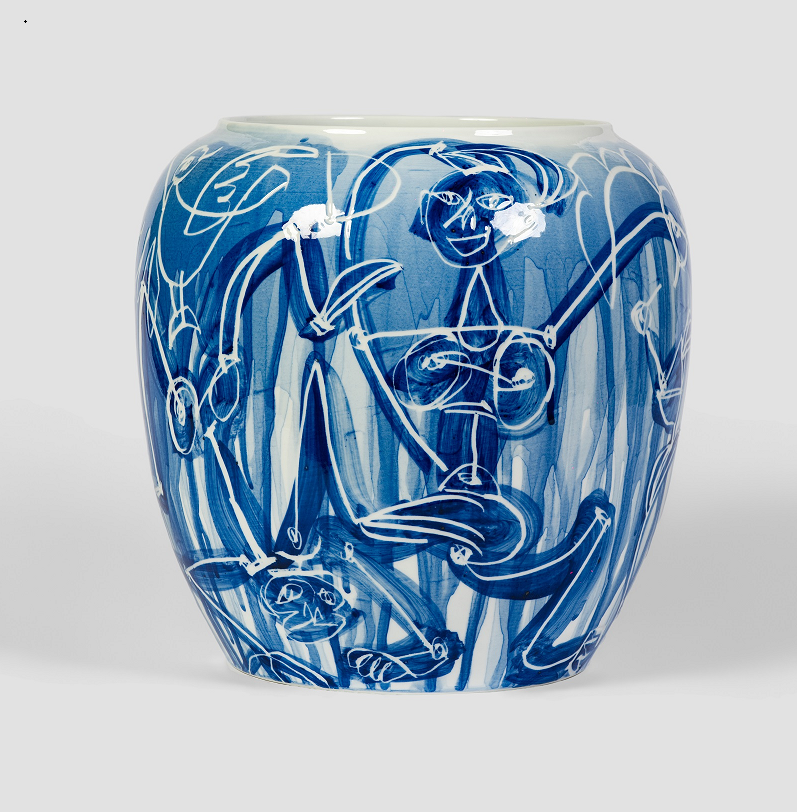
To speak of originality does not imply severing the relationship betweenthe contemporary and history, nor does it suggest a position of opposition toward the past. On the contrary, my practice is grounded in a sustained and critical engagement with the histories of both porcelain and painting. The distinction lies in my refusal to return to any single tradition. Instead, arange of historical achievements—including splash techniques, painterly methodologies, carving practices, as well as what are conventionally regardedas technical “defects” such as glaze removal, spotting, and materialruptures—are treated as generative and reactivatable resources.
Within the global discourse of porcelain, my work does not belong toblue-and-white, famille rose, or any established typological category, nor doesit fully correspond to any existing formal language of contemporary ceramics.It is closer to an as-yet-unnamed trajectory: a contemporary porcelain practicecentered on painterly thinking and action, one that reassesses the historical“resource” of completion, adopts destruction as a mechanism for new valuegeneration, and ultimately submits to kiln fire as the final arbiter. In thisprocess, painting, material, and firing enter into a form of material co-existence.
This practice does not aim to deliver definitive conclusions. Rather, it persistently raises urgent questions about lived expression within society:when painting—charged with vital human energy—withdraws from the canvas and intervenes in porcelain not as decoration but as an expressive subject; when porcelain, as a field of action, refuses to be monopolized and governed by the historical authority of “looking like porcelain,” resisting typological classification—what new relationships might emerge between vision, action,material, and lived experience?
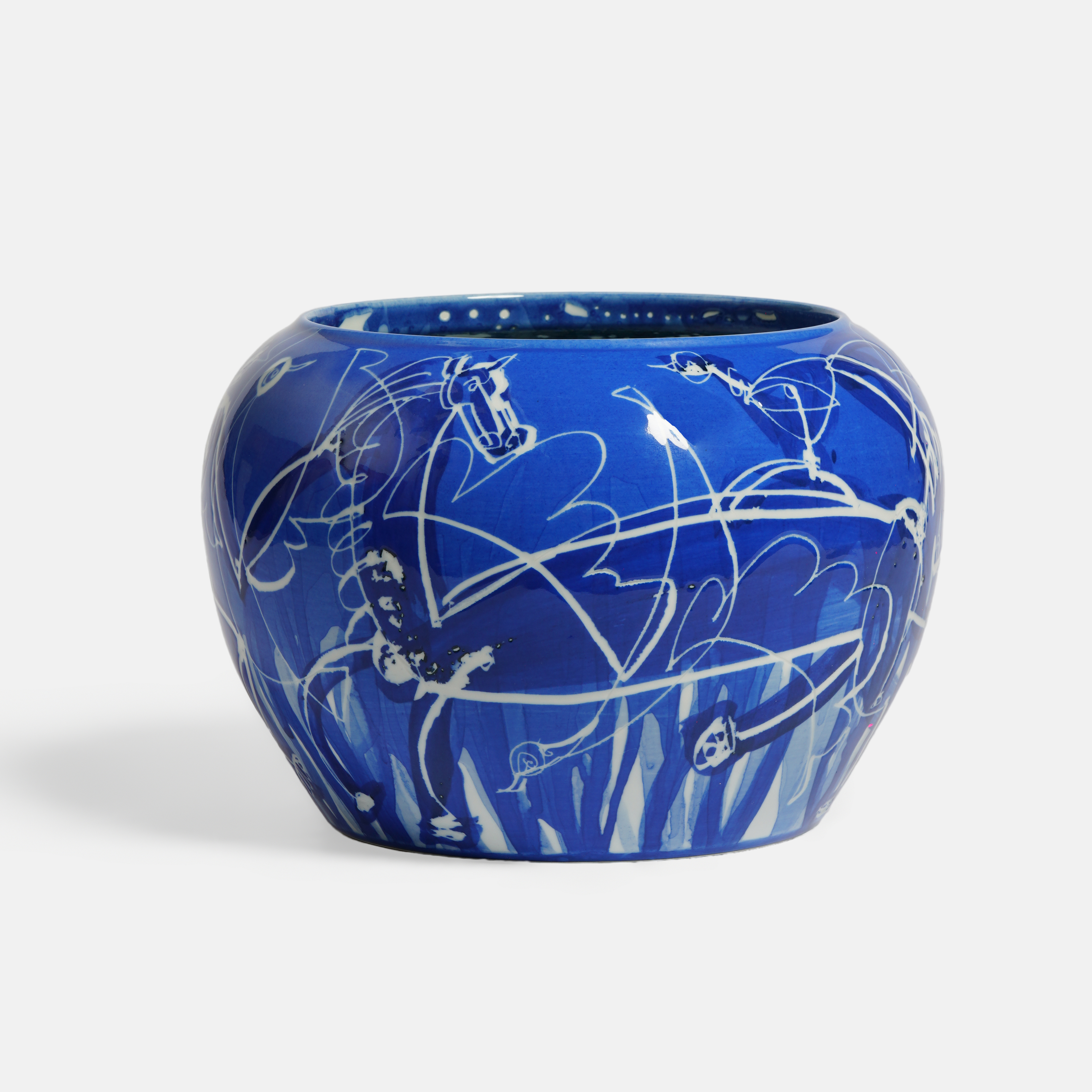
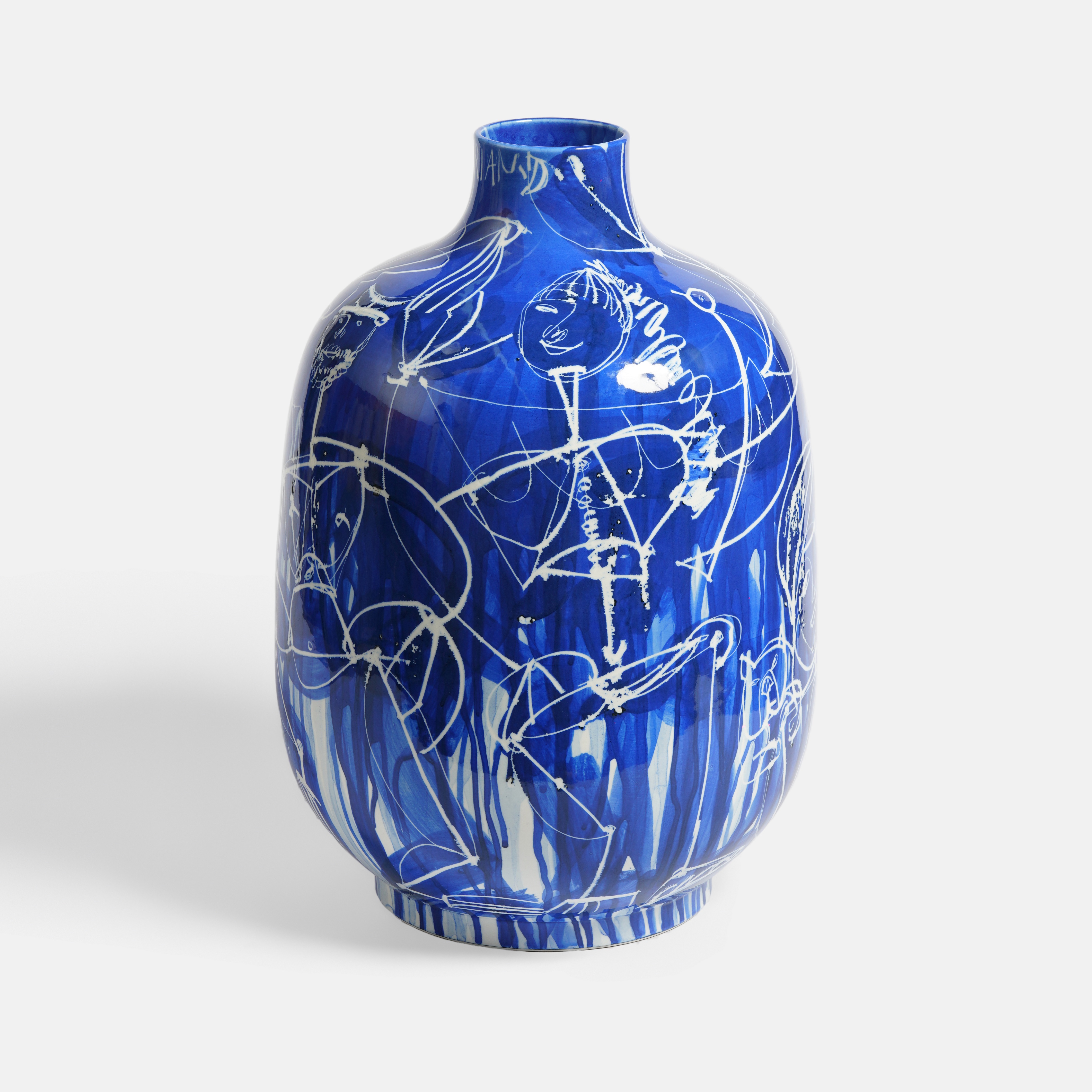
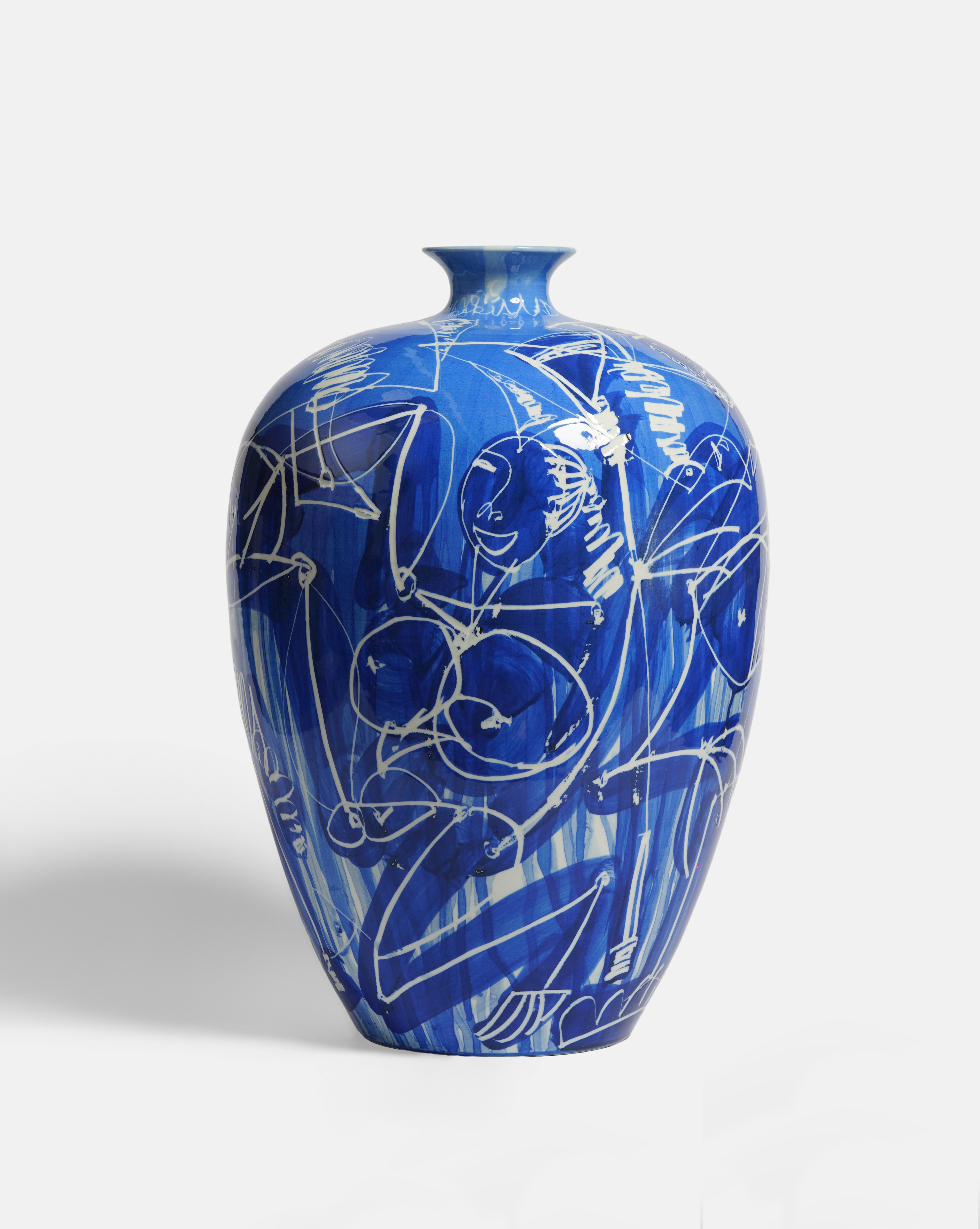
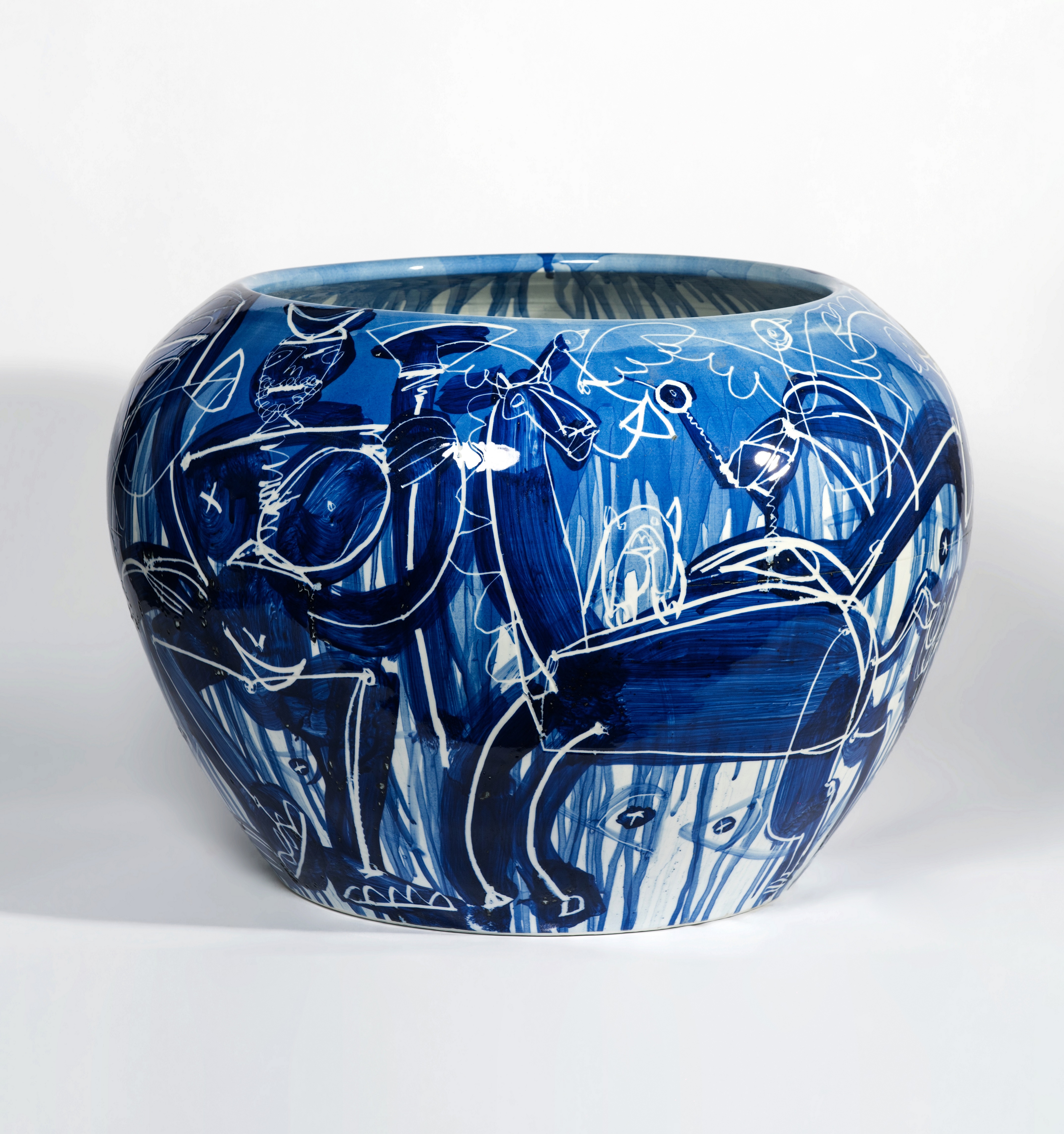
In my practice, porcelain is no longer governed by historical authority,nor does it function as material proof of craft completion. Instead, it becomesan artistic form that unfolds in parallel with contemporary lived experience.By introducing the methodologies of painting into porcelain, and by allowing uncertainty—conceptual, emotional, and spiritual—to operate within thematerial, I adopt destruction as both the point of departure and the point ofreturn in the reconstruction of value.
Obstacles and failures encountered throughout this process are not deviations from the work but essential tests of the path itself, serving as validations of the underlying artistic proposition. Gradually, the objective of the practice becomes clear: within the global context of contemporary art, Iseek to explore a generative trajectory for porcelain that exceeds craft-based definitions—one that is grounded in pure artistic inquiry, remains structurally open, and engages directly with the immediacy and vitality of lived experience.
This research is not conceived as a closed or self-sufficient theory, but as an operative framework continuously tested through material practice. Porcelain, pigment, and incision function not as illustrations of an idea, but as sites where the theory is subjected to physical resistance, irreversibility, and contingency.
In this sense, each work does not resolve the tension between destruction and generation; it temporarily stabilizes it. The act of pouring, drawing, and cutting produces provisional states rather than definitive conclusions, exposing completion as fragile, conditional, and reversible only in thought, never in matter.
The framework of destruction–generation therefore operates as a method rather than a theme. It structures decision-making, risk, and temporal progression within the work, allowing each piece to remain open to interruption, failure, and reconfiguration. The artworks should be understood not as final objects, but as material events within an ongoing process.
This essay serves as the conceptual foundation of Darian Duan’s porcelain practice.It may be referenced in exhibitions, catalogues, and academic contexts.For a concise overview, see: Artist Profile
© Darian Duan / TIDO ART, First published on Tido.art. For citation or academic use, please contact info@tido.art

