January 14, 2026
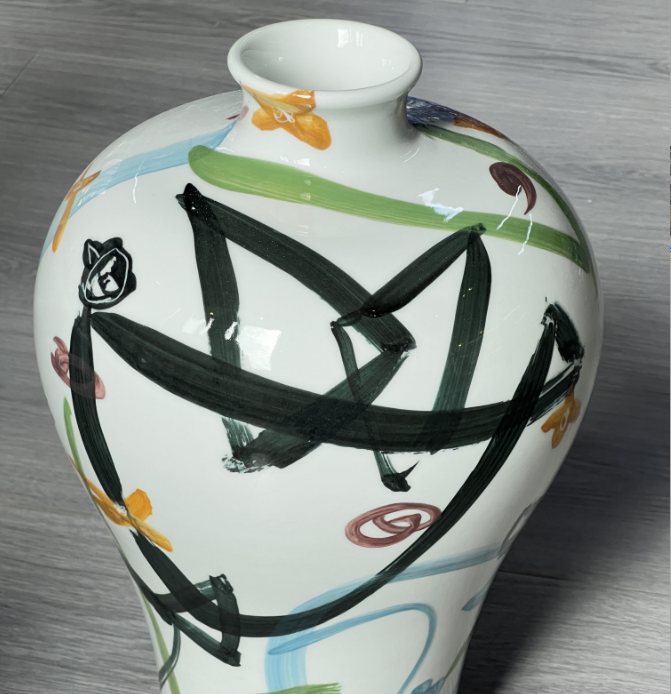
TheProblem of Colour: Transposing the Painterly into Spatial Volume
By Darian Duan
Artistic conceptsoften arise from an artist’s response to the issues they care about. Porcelainart today faces a pressing challenge: in the contemporary context, must itstill be understood solely in terms of “type” and “technique”? This phenomenonsignificantly hinders its development. Or, like painting, could porcelainbecome a continually evolving system of ideas and methods, thereby breaking thestalemate and gaining the freedom to begin anew?
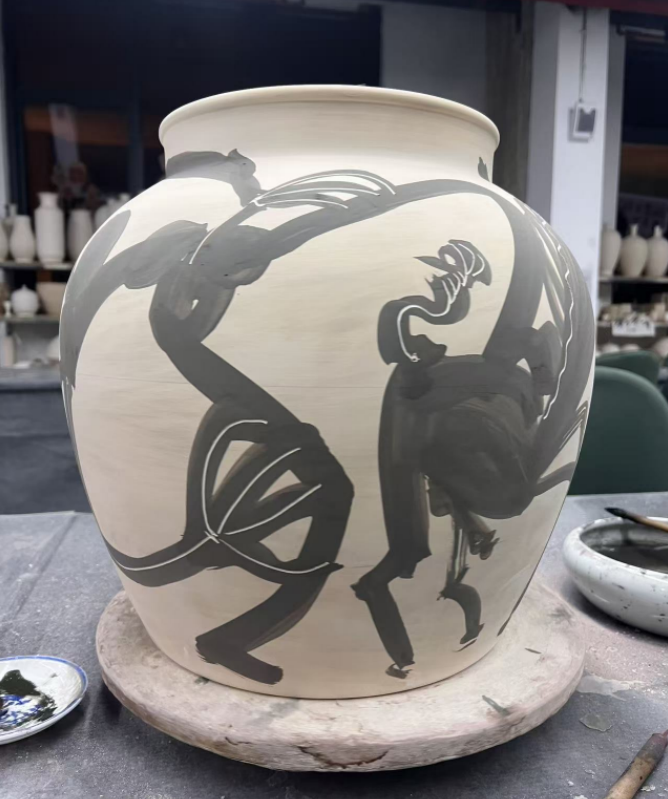
It is preciselyfrom this awareness of the issue that I introduced the concepts and methods ofpainting into porcelain practice. Consequently, my work with porcelain is notbased on the continuation of existing styles or decorative types but seeks toreposition the possibilities of porcelain within a global context.
III. The Problem of Colour: Transposing the Painterlyinto Spatial Volume
Colour has always been the heart of porcelain—as the adagegoes, "three parts form, seven parts painting." However, itsapplication has long been compartmentalized into rigid categories: Blue andWhite, Famille Rose, Copper Red, or Monochrome glazes. Whilehistorically significant, these have become fossilized as stylistic labels.
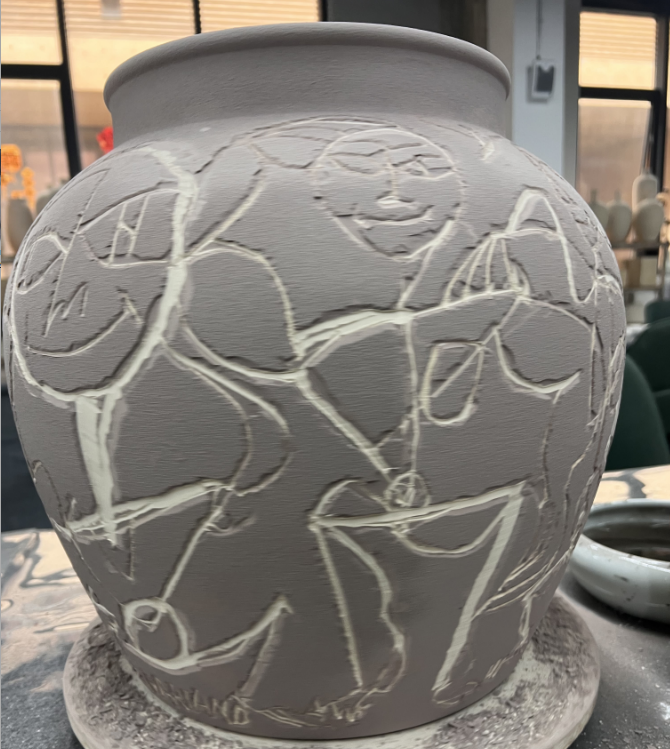
My practice does not aim to return to these establishedcategories; rather, it translates my understanding and perception of colour inpainting into the three-dimensional medium of porcelain. Colour is no longermerely a surface layer—it is brought into the temporal dimension of the workthrough the successive flows and overlaps of Poured Colour. The brushbecomes a vehicle for expressive chromaticity. Under the combined effects ofthe thickness of coloured glazes, the depth of carved lines, and the firing process,a visual experience emerges that is simultaneously spatial and fluid.
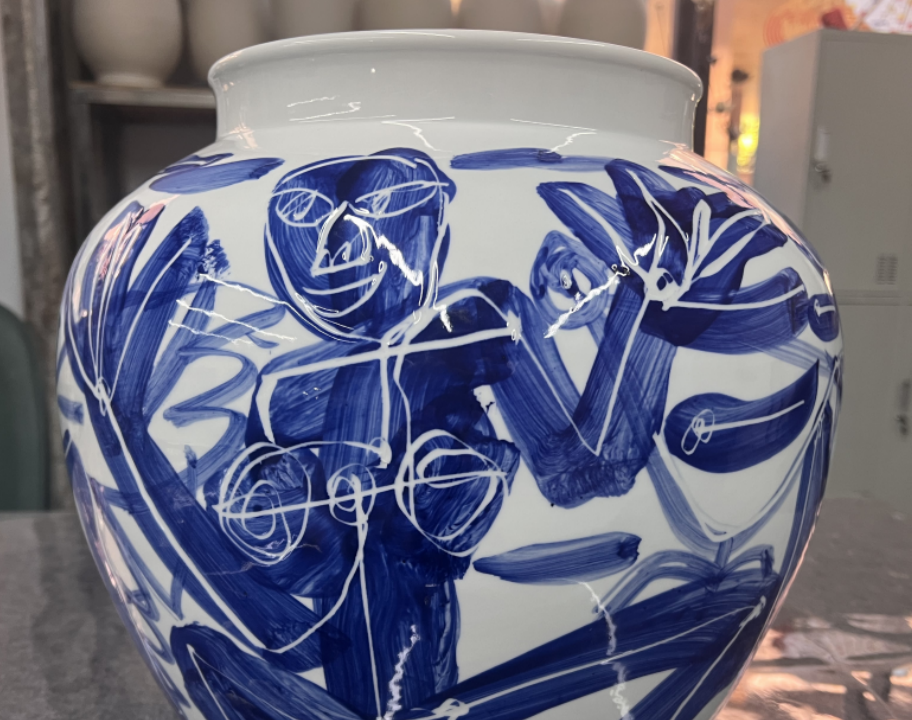
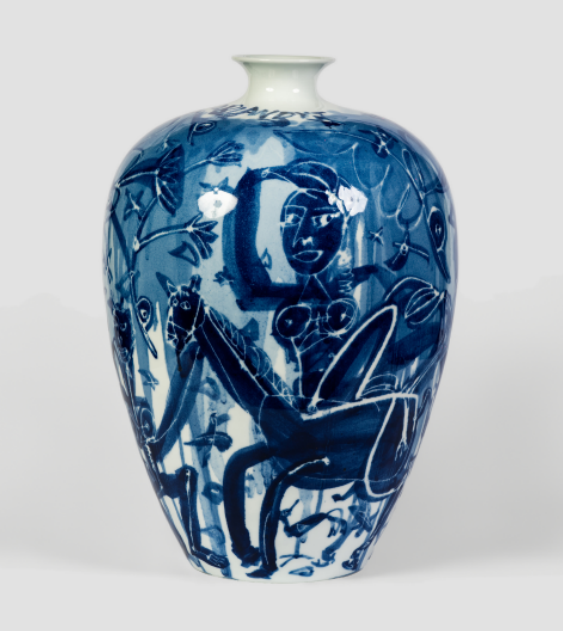
Taking classic blue-and-white porcelain as an example, myapproach to the cobalt pigment is not merely an attempt to continue thehistorical lineage of “blue-and-white” decoration. Rather, I treat blue as apainterly language endowed with emotional density, temporal transformation, andstructural weight. Through the layering and reconstruction of Poured Colour,brushwork, and the metaphysical incisiveness of carved lines, blue acquiresspatial dimensionality, temporal fluidity, and path unpredictability on theporcelain surface. In this way, the work decisively transcends the historicalauthority of “completed” decorative discourse confined to the planar surface.
To be continue



%20-%20Copy.jpg)