May 21, 2026
.jpg)
Melbourne-based Chinese ceramic artist Darian Duan has been selected for the 6th International Ceramics Triennial UNICUM 2026, one of Europe’s leading international exhibitions dedicated to contemporary ceramic art.
Organised by the National Museum of Slovenia in collaboration with Center Rog, UNICUM 2026 will be presented across multiple venues in Ljubljana, Slovenia, from May to October 2026.
The triennial is recognised internationally for its focus on experimental and contemporary ceramic practices, bringing together artists whose works explore new material, conceptual, and spatial approaches within the field of ceramics.
For the 2026 edition, UNICUM received applications from 395 artists across more than 50 countries. Following an international jury selection process, 170 artists from over 30 countries were selected for exhibition.
The jury included curator and art historian Irene Biolchini, curator Alenka Gregorič, and ceramic artist and professor Danijela Pivašević.
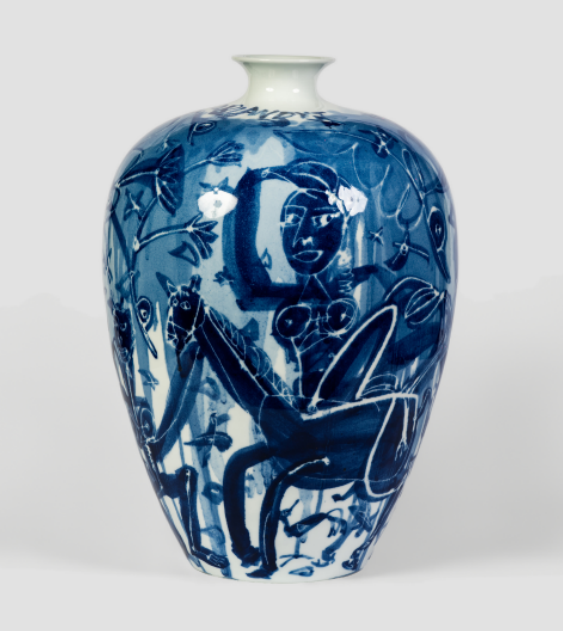
Duan’s practice explores the relationship between porcelain, painting, destruction, and reconstruction. Through processes including pouring, painterly intervention, and structural fragmentation, his works investigate how ceramic material can operate beyond traditional vessel-based forms and function as a contemporary painterly structure.
His ongoing theoretical framework, Destructive Regeneration, examines porcelain as an unstable visual field shaped through rupture, tension, reconstruction, and transformation.
The selection for UNICUM 2026 marks an important international presentation of Duan’s evolving ceramic practice and reflects growing recognition of experimental approaches to contemporary porcelain within broader international ceramic discourse.
The 6th International Ceramics Triennial UNICUM 2026 will open in Ljubljana on 15 May 2026.
Darian Duan is a Melbourne-based Chinese ceramic artist whose practice combines porcelain, painting, and material experimentation. His work focuses on the transformation of ceramic structure through destruction, painterly intervention, and reconstruction, exploring new possibilities for porcelain within contemporary art contexts.




%20-%20Copy.jpg)
